

Assassin’s Creed® Nexus VR
Author
Elisha Roodt
Date Published
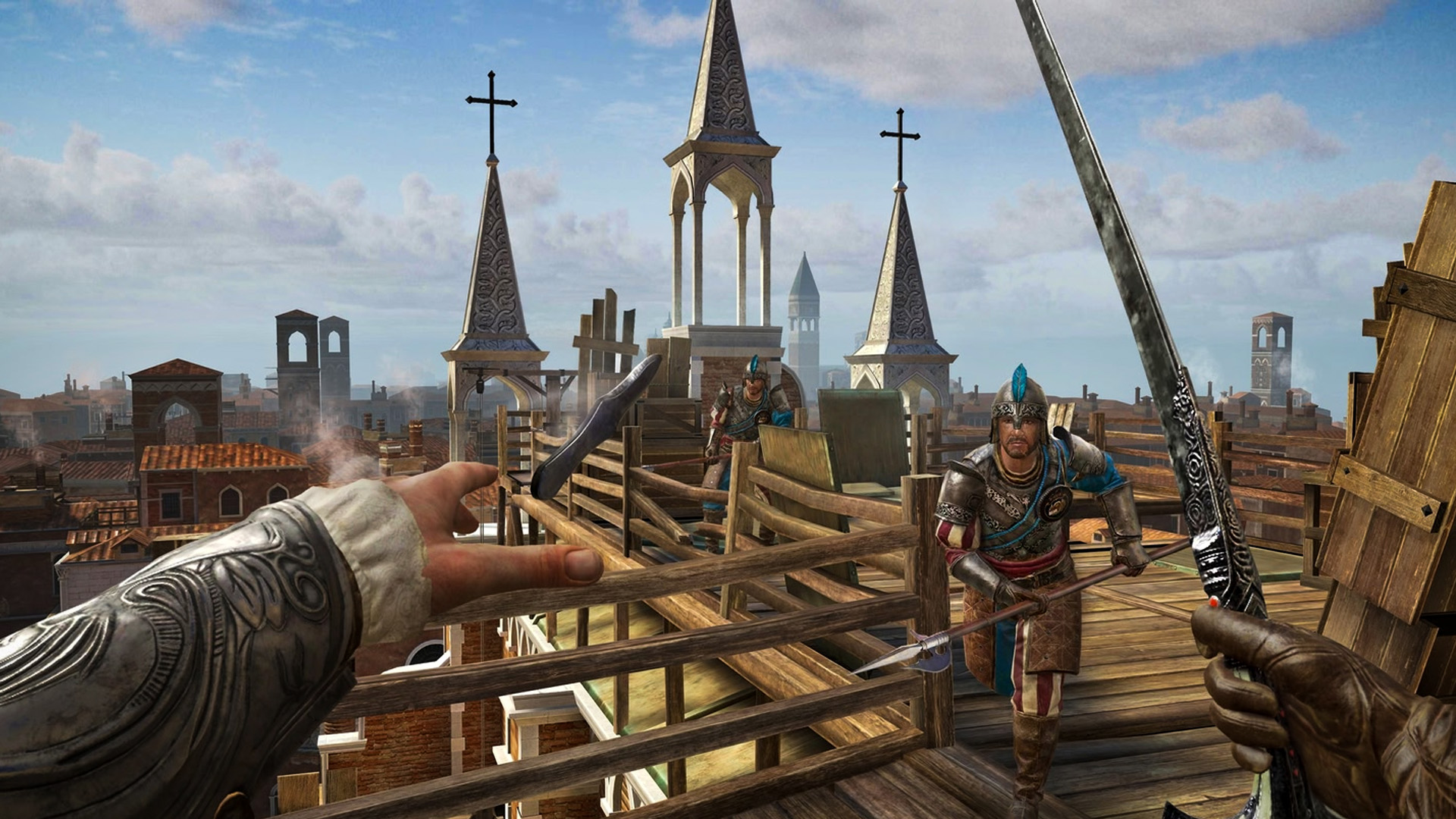
Virtual reality has often promised the ultimate immersion, yet few titles have delivered on that ambition as fully as Assassin’s Creed® Nexus VR. Launched on November 16, 2023, this marks the first time Ubisoft has built an Assassin’s Creed experience from the ground up for VR, offering fans and newcomers alike a chance to embody the series’ legendary protagonists in first personUbisoftUbisoft News. Whether you’re perched atop a Venetian rooftop or weaving through the bustling streets of Ancient Greece, Nexus VR redefines what AAA VR can achieve.
A New Chapter in the Assassin’s Creed Saga
From its origins in 2007, Assassin’s Creed has captivated players with its blend of historical fiction, stealth gameplay, and philosophical underpinnings. Nexus VR takes these pillars and catapults them into a wholly new dimension. Instead of observing Ezio Auditore or Kassandra from a third-person vantage point, you become these characters. The hack-and-slash combat, subtle pickpocketing, and heart-pounding Leaps of Faith are no longer cinematic set pieces—they’re visceral, physical actions you perform with your own hands and body.
Imagine the thrill of climbing the Leaning Tower of Pisa not through button presses, but via actual arm-over-arm maneuvers. Or the hush-hush tension of sneaking through Venetian markets, your breath caught in your throat as you inch past a patrolling guard. Nexus VR invites you to trade passive observation for muscle-memory mastery, forging a bond between player and assassin that few games can match.
From Templars to Triumph: VR Gameplay Mechanics
At the heart of Nexus VR lies its translation of core Assassin’s Creed mechanics into VR. Combat is conducted with intuitive motions: a horizontal swing for a hidden‐blade strike, an upward thrust to parry, or a backward dodge achieved by a quick step. Stealth plays out as you physically crouch behind crates, peer around corners, and time your blade to strike with deadly precision.
Parkour, once a matter of timing button combos, becomes an exercise in spatial awareness. To vault over barriers, you physically extend your arms and lean your weight forward. Balancing on narrow beams demands subtle weight shifts, while branching your focus between ground and sky—ever on the lookout for your next handhold—immerses you in an adrenalized state.
The iconic Leap of Faith now elicits genuine vertigo: rather than a cinematic dive, you launch yourself off high ledges, trusting the wind to catch you as you plunge into haystacks far below. That rush of wind in your face, the sense of altitude, and the soft impact all combine to create one of the most memorable VR moments in recent memoryUbisoft.
Portable Palaces: Exploring Open Worlds in VR
Assassin’s Creed Nexus VR isn’t confined to a single locale. You’ll revisit the grandeur of Renaissance Italy with Ezio Auditore, roam the sun-baked expanses of Ancient Greece alongside Kassandra, and experience colonial America through Connor’s eyes. Each environment is meticulously reconstructed: the cobblestone alleys of Venice glint in the midday sun, olive groves sway in the Mediterranean breeze, and the wooden docks of Boston creak beneath early-morning fog.
Yet beyond visual fidelity, it’s the interactivity that sets Nexus VR apart. Interact with civilians to gather intel or create distractions. Light a torch to signal an ally. Examine period artifacts up close. In every case, the world resists being a static backdrop; it beckons exploration, whispers secrets, and responds dynamically to your presence. It’s a living tapestry of history, rendered not just to be seen, but to be felt, touched, and livedUbisoft News.
Crafting the Sword: From Red Storm to VR
Behind this achievement lies a multinational development effort. Led by Red Storm Entertainment, with crucial support from Ubisoft’s studios in Düsseldorf, Reflections, Mumbai, Pune, Montreal, Belgrade, and Berlin, Nexus VR represents a concerted push to translate a beloved franchise into immersive realityWikipedia. Development began as far back as 2020, when a prototype Assassin’s Creed VR was revealed at Facebook Connect. Over the ensuing years, the team iterated on mechanics, refined comfort options, and optimized performance to harness the full potential of Meta Quest hardware.
Composer Chris Tilton, known for his work across the Assassin’s Creed series, returned to score Nexus VR. His orchestral arrangements swell as you traverse rooftops, then retreat into whisper-quiet strings as you slip unseen through Templar encampments. Together with environmental audio—shouts in the marketplace, horses’ hoofbeats, the swish of wind—Tilton’s work elevates every encounter, marrying authenticity with theatrical flourishWikipedia.
Comfort and Accessibility: Setting New Standards
VR can be an unforgiving medium for newcomers and veterans alike, yet Nexus VR makes inclusivity a cornerstone. A dedicated accessibility menu offers hand-stabilization options, multiple control layouts, and even a “fear of heights” mode that introduces a virtual floor beneath you when gazing over precipices. Movement presets range from continuous locomotion to teleportation, with four comfort profiles tailored to different levels of motion sensitivity. These options ensure that whether you’re a seasoned VR enthusiast or stepping into a headset for the first time, you can fine-tune the experience to your comfort levelTechRadar.
Adjustable vignette intensity, dynamic snap-turn angles, and customizable button mapping make Nexus VR a welcome environment for players with diverse needs. Ubisoft’s commitment here is more than lip service; it’s a genuine effort to open the Animus to as many would-be assassins as possible.
Quest Connection: Platforms and Performance
Assassin’s Creed Nexus VR is available exclusively on Meta Quest 2, Meta Quest 3, and Meta Quest Pro, taking full advantage of the stand-alone hardware’s inside-out tracking and ergonomic designUbisoft. While the Quest 2 provides a solid introduction, the Quest Pro’s enhanced resolution and eye-tracking support push immersion even further. Across all devices, the game maintains a stable 72–90 FPS, ensuring fluid motion during combat, parkour, and exploration.
Ubisoft’s optimization team worked closely with Meta to balance graphical fidelity with performance. Texture streaming, dynamic level-of-detail scaling, and intelligent occlusion culling combine to render densely populated cities without sacrificing frame rate. The result is a seamless experience where the only lag you’ll notice is the moment before your blade finds its mark.
Embodying the Assassin: Narrative and Character
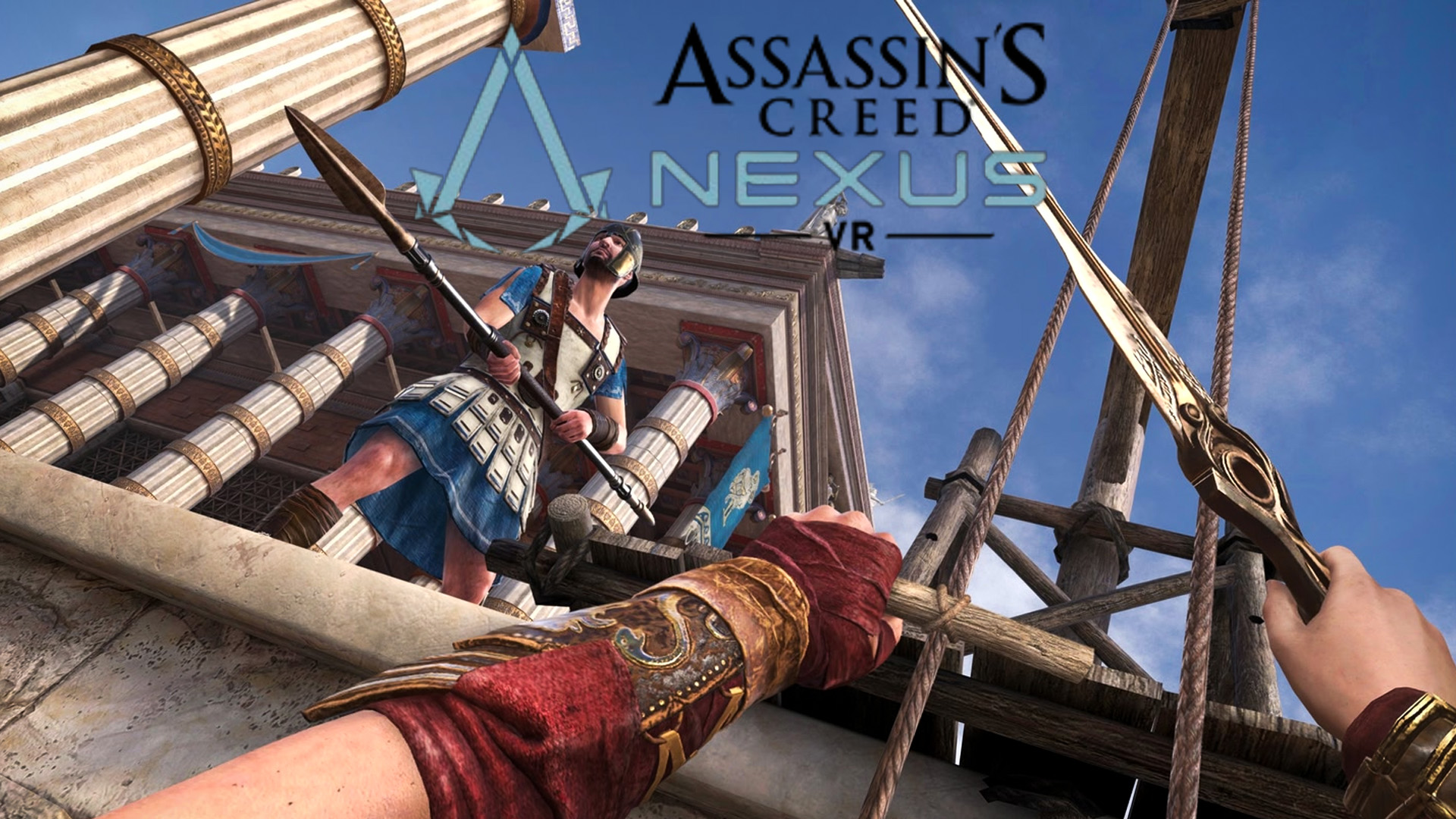
The interplay between Dominika’s digital directives and your clandestine mission creates dramatic tension. As you plant each bomb, you risk altering the course of history contained within the Nexus Eye. By the final act, when Abstergo’s hunters close in, the lines between hacker and assassin blur, culminating in a showdown that’s as emotionally charged as it is visually spectacular.
Critical Acclaim and Commercial Impact
Upon release, Assassin’s Creed Nexus VR garnered generally favorable reviews, earning a 78/100 on Metacritic and a 7/10 from IGN, which praised its completeness while noting occasional parkour hiccupsWikipedia. Wired hailed it as a compelling proof of VR’s readiness for AAA game development, lauding its narrative and technical execution WIRED.
Despite critical acclaim, Nexus VR’s sales fell short of Ubisoft’s projections, leading CEO Yves Guillemot to curb further investment in large-scale VR projects. While disappointing from a business standpoint, the title remains an artistic triumph and a benchmark for immersive gaming.
Looking Forward: The Future of VR and the Hidden Blade
Assassin’s Creed Nexus VR stands as both a milestone and a proving ground. It demonstrates that with thoughtful design, technical polish, and a willingness to embrace player comfort, VR can sustain complex narratives and open-world gameplay. Its innovations—in adaptive accessibility, full-body parkour, and meta-narrative framing—will likely influence the next generation of VR titles.
For fans of the series, Nexus VR offers a chance to step inside history rather than watch it unfold. For VR enthusiasts, it challenges preconceptions of what standalone headsets can achieve. And for the industry, it serves as a reminder that ambitious, ground-up VR projects can succeed—artistically, if not yet commercially.
As you remove your headset and return to reality, the echo of steel on steel and the thrill of a successful stealth kill linger. Assassin’s Creed Nexus VR doesn’t just invite you to play as an assassin; it asks you to become one. And in so doing, it delivers on the virtual reality dream more completely than any title before it.