
The Tycoon: Pizza Cafe
Author
Elisha Roodt
Date Published
Navigating the Fusion of Gastronomy and Virtual Realms
Imagine stepping into a world where the aroma of freshly baked pizza intertwines with the hum of virtual reality engines. "The Tycoon: Pizza Cafe VR Game" is not merely a digital recreation of a pizzeria; it is a sophisticated simulation that allows players to orchestrate every facet of a pizza empire. From dough kneading algorithms to customer satisfaction metrics, the game merges meticulous economic strategy with sensory immersion, providing an educational yet entertaining playground for aspiring entrepreneurs and VR enthusiasts alike.
Architecting a Virtual Culinary Ecosystem
Dynamic Environment Modeling
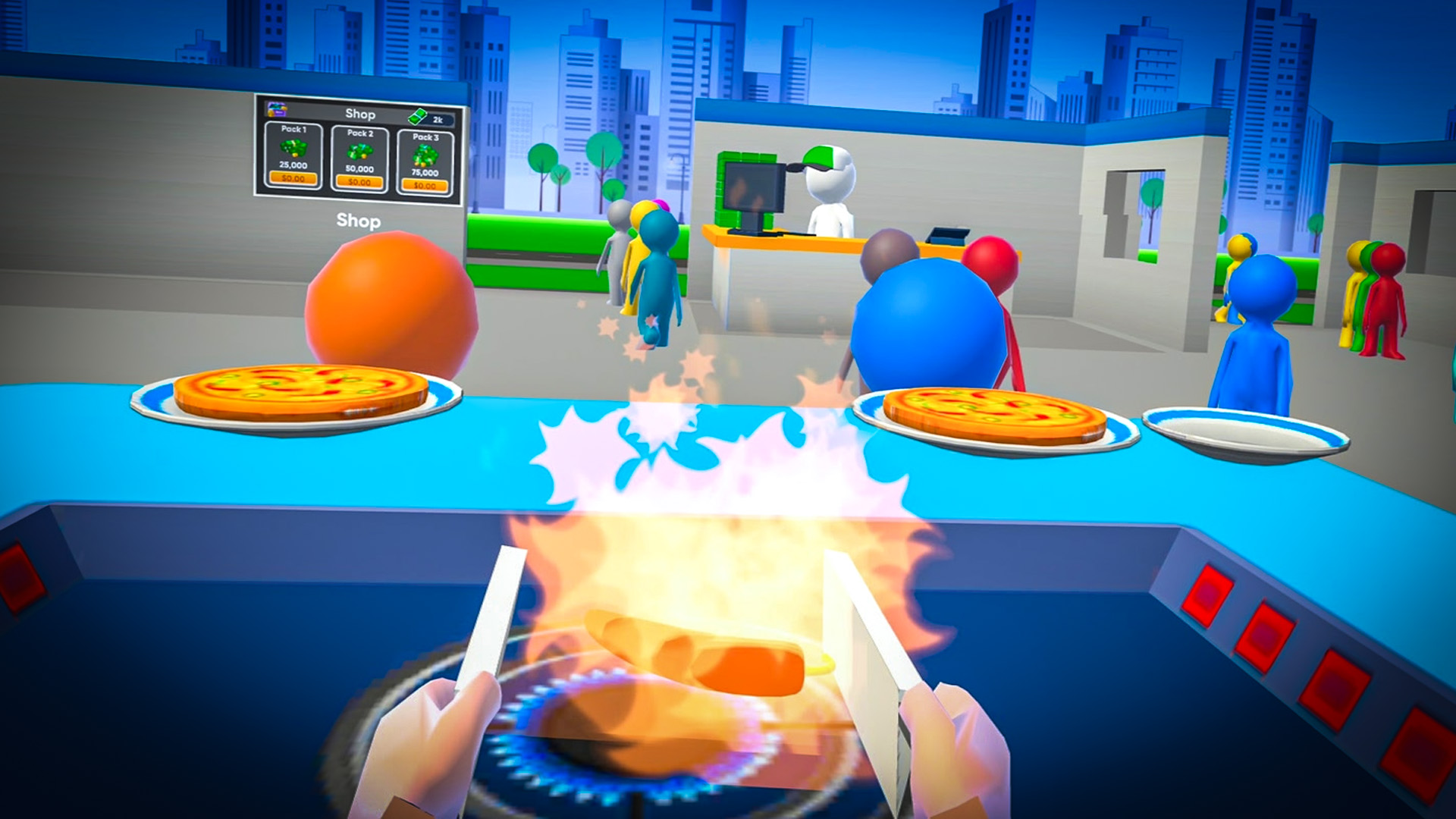
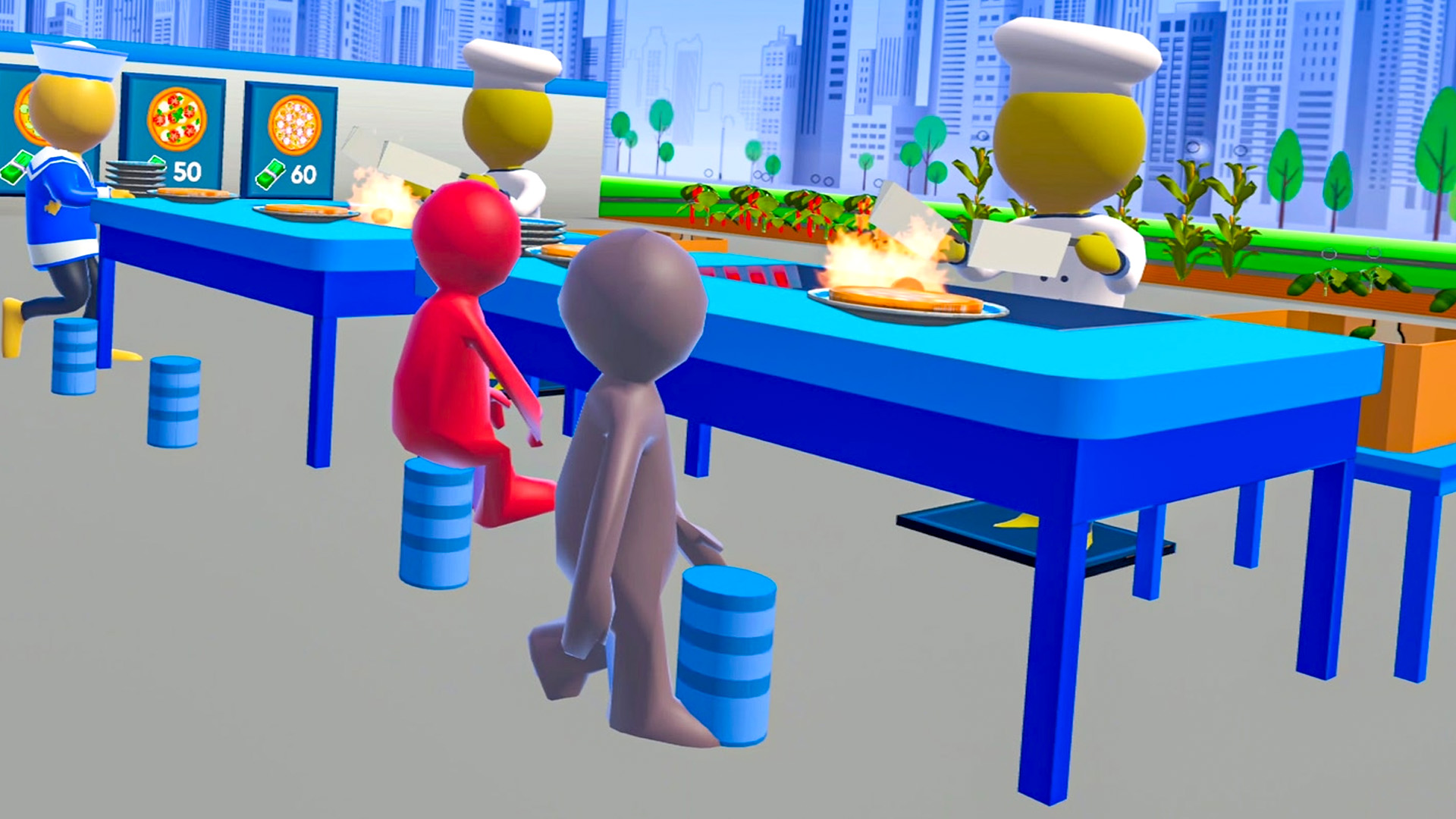
At the core of Pizza Cafe VR’s allure is its dynamic environment modeling. Unlike traditional static simulations, the game constructs a fluid ecosystem where every table, oven, and ingredient shelf responds to both player input and AI-driven variables. Visual fidelity is maintained through procedural generation techniques that ensure each pizza creation session feels organic, while physics-based interactions allow toppings to scatter, cheese to stretch, and steam to rise naturally. The environment’s adaptability means that even minor design choices can cascade into unique operational challenges, creating a realistic microcosm of restaurant management.
Consider a scenario where a rush-hour spike occurs due to an AI-simulated festival nearby. The kitchen’s spatial constraints and ingredient stock levels suddenly become crucial variables, compelling players to optimize workflow, staff allocation, and inventory management in real time. This mirrors the unpredictability of actual culinary operations, emphasizing decision-making under pressure, while simultaneously offering a sandbox where experimentation yields immediate, tangible feedback without real-world consequences.
Integrating AI-Driven Customer Interactions
Behavioral Simulation Algorithms
The essence of engagement in Pizza Cafe VR lies in its AI-driven customer interactions. Each patron exhibits a distinct behavioral profile, governed by decision-making algorithms that simulate preferences, patience thresholds, and purchasing patterns. These AI models utilize reinforcement learning principles, allowing virtual customers to adapt over time based on the player’s service quality. The complexity of these interactions transforms routine order fulfillment into a strategic exercise, where understanding customer psychology becomes as vital as mastering the culinary mechanics themselves.
For instance, a particularly impatient customer may leave a negative review if their order is delayed, impacting the restaurant’s reputation score and subsequently influencing future patron traffic. Conversely, catering to niche preferences, such as vegan or gluten-free options, requires players to maintain specialized inventory and train staff accordingly. These nuanced layers of simulation cultivate a delicate balance between operational efficiency and customer satisfaction, demonstrating how artificial intelligence can deepen immersion and learning in virtual environments.
Real-Time Feedback Systems
Pizza Cafe VR incorporates real-time feedback mechanisms that translate customer interactions into actionable insights. Visual indicators, audible cues, and subtle haptic feedback collectively inform players about service bottlenecks, satisfaction levels, and revenue fluctuations. This real-time telemetry mirrors enterprise analytics tools, albeit gamified, allowing players to iterate rapidly and refine strategies without disrupting the flow of gameplay. Such systems encourage proactive decision-making, blending learning objectives with immersive entertainment.
Consider the hypothetical scenario of a high-demand evening: players receive visual heatmaps indicating crowded areas and delayed orders. Simultaneously, auditory cues signal impatient chatter or enthusiastic praise, prompting adjustments in task allocation and staff deployment. By responding to these multilayered inputs, players internalize principles of workflow optimization and customer-centric management, reinforcing the educational dimension of VR simulations in an engaging and memorable way.
Emotionally Resonant Narrative Design
Beyond mechanics and analytics, Pizza Cafe VR leverages narrative design to create emotionally resonant experiences. Story arcs, contextual dialogues, and scenario-based challenges foster player attachment to both the virtual restaurant and its patrons. These storytelling elements are underpinned by environmental cues, character expressions, and adaptive dialogue systems that respond dynamically to player actions. The result is a simulation that not only tests operational acumen but also cultivates empathy, narrative engagement, and strategic foresight.
Imagine the tension of preparing a limited-time gourmet pizza during a critical festival event, with a VIP customer evaluating every step. The narrative framing transforms routine gameplay into a high-stakes drama, heightening immersion and investment. Such techniques exemplify how well-crafted storytelling, even in ostensibly transactional VR simulations, can enrich user experience and reinforce learning outcomes by appealing to both intellect and emotion.
Economics of Virtual Entrepreneurship
Simulated Market Dynamics
The Tycoon aspect of Pizza Cafe VR is firmly rooted in economic simulation. Virtual supply chains, fluctuating ingredient costs, and competitor behaviors introduce complexity reminiscent of real-world business environments. Players must anticipate market trends, negotiate with suppliers, and balance operational budgets to achieve profitability. The game employs agent-based modeling to simulate competitor pizzerias, generating dynamic pricing and service strategies that require adaptive thinking and resourcefulness.
Envision a scenario where a rival café introduces a promotional discount. Players must evaluate cost-benefit trade-offs, optimize marketing strategies, and adjust pricing algorithms to maintain competitive advantage. These economic simulations, while gamified, mirror fundamental principles of supply-demand elasticity, strategic investment, and risk assessment, offering a sandbox for testing entrepreneurial hypotheses without financial exposure.
Revenue Analytics and Optimization
Pizza Cafe VR integrates comprehensive revenue analytics, displaying real-time profit margins, inventory turnover, and customer lifetime value. These insights enable players to make informed decisions regarding menu pricing, promotional campaigns, and staffing adjustments. The game’s UI presents complex datasets through intuitive dashboards, visualizations, and interactive charts, allowing players to internalize financial concepts while engaging in immersive gameplay. This fusion of gamification and financial literacy exemplifies how virtual platforms can serve as experiential learning tools.
For instance, if a particular pizza topping becomes scarce due to market volatility, the player must decide whether to increase prices, seek alternative suppliers, or temporarily remove the item from the menu. Each choice influences revenue streams, customer satisfaction, and inventory management, reinforcing the interconnected nature of business operations in a controlled, consequence-free virtual environment.
Investment and Expansion Mechanics
Expansion mechanics in Pizza Cafe VR allow players to scale operations by opening new locations, investing in staff training, or upgrading kitchen technology. These mechanics are governed by simulation engines that model spatial constraints, human resource allocation, and ROI projections. Strategic expansion requires balancing risk and reward, encouraging players to apply critical thinking, long-term planning, and operational foresight. Each decision resonates across multiple simulation layers, reflecting the complexity of real-world entrepreneurial ventures.
Imagine choosing to invest in a high-end pizza oven that increases output but depletes your capital reserves. Players must weigh short-term performance gains against potential liquidity challenges, learning through iterative experimentation. Such mechanics offer insight into financial prudence, capital management, and operational scaling, effectively translating abstract economic principles into tangible, interactive experiences.
Technical Architecture Behind the Simulation
Physics Engines and Realistic Animations
Pizza Cafe VR’s technical sophistication is anchored in its physics engine, which orchestrates realistic interactions between objects, characters, and environmental elements. Collision detection, particle systems for flour dust and steam, and soft-body simulations for dough provide tactile authenticity. These features allow players to engage with ingredients and tools in ways that mimic real-world behavior, enhancing immersion and operational intuitiveness. The nuanced animations reinforce sensory cues, guiding player actions without explicit instructions.
Consider kneading dough using motion controllers: the engine calculates resistance, elasticity, and deformation in real time. A misaligned motion leads to uneven dough texture, affecting baking outcomes. This granular attention to detail not only enhances realism but also introduces procedural learning, where players internalize processes through embodied experience rather than textual guidance, bridging cognitive understanding with motor skills.
Network Architecture and Multi-Player Integration
While primarily a single-player experience, Pizza Cafe VR incorporates optional multiplayer scenarios where players collaborate or compete within shared virtual spaces. Network architecture leverages client-server models with predictive algorithms to minimize latency and synchronize actions. State replication ensures consistent environments across participants, enabling cooperative kitchen workflows or competitive pizzeria management. These architectural choices maintain gameplay fluidity while supporting complex interactions in real-time VR settings.
For example, in a collaborative event, one player might handle dough preparation while another manages topping assembly. The system reconciles simultaneous inputs, rendering precise outcomes in each player’s view. This approach demonstrates how distributed simulation and networking can create cohesive, immersive experiences, reinforcing teamwork, strategic planning, and communication skills within a digital culinary landscape.
Optimized Rendering Pipelines
High-fidelity graphics in Pizza Cafe VR rely on optimized rendering pipelines that balance performance with visual realism. Techniques such as level-of-detail management, texture streaming, and real-time lighting adjustments reduce computational load without compromising immersion. Shader programs simulate reflective surfaces, dough translucency, and oven glow, producing photorealistic visuals while maintaining frame rates conducive to motion sickness prevention. This careful orchestration of graphical resources ensures both aesthetic appeal and physiological comfort.
Imagine viewing a bubbling cheese pizza in a dimly lit café: light diffusion across melted mozzarella, subtle steam effects, and accurate shadows all converge to create sensory verisimilitude. Behind the scenes, these visual phenomena are computed efficiently to sustain VR performance thresholds, exemplifying how technical precision underpins immersive experience in real-time simulations.